Are Kids Learning or Just Watching?

- Admin
- 24 December 2025
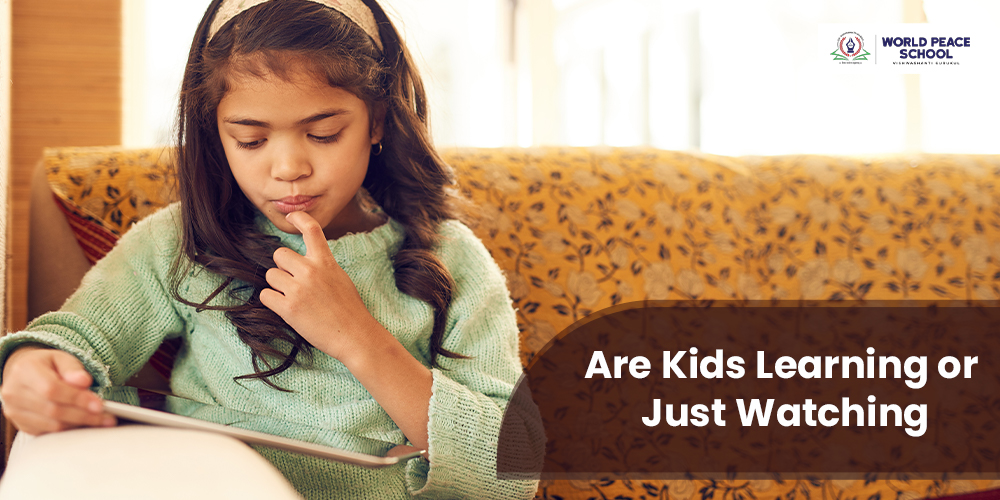
Your toddler is cuddled up on the couch, tapping purposefully with little fingers while their eyes are fixed on a tablet.
At the doorway, you stop.
You ponder.
Is she picking up colours and shapes?
Or is she just captivated by the cheery music and dazzling lights?
Nowadays, most parents have that question on their minds.
And its more important than we frequently acknowledge.
This book aims to help you detect authentic learning, define meaningful screen time, and transform ordinary digital encounters into learning opportunities.
Understanding the resources kids use daily, especially at WPS School, is the first step towards being an informed parent.
What Does Meaningful Screen Time Actually Mean?
The clock is not the focus of meaningful screen time.
The experience is what matters.
If a youngster is thinking, selecting, responding, or producing, a few minutes can make a big difference. When screens pique interest, motivate action, or establish a connection with reality, they become beneficial.
A toddler might enthusiastically tell you about an elephants trunk after watching a brief animal-themed video. Engagement is that.
However, the experience was passive if she left without saying anything or giving it any thought.
Children learn when they form relationships.
Screens become aids rather than distractions when they encourage participation.
How Children Actually Learn from Screens
Touch, movement, music, and social connection are the best ways for young toddlers to learn. A problem known as the video deficiency effect is described by researchers. This indicates that kids younger than three frequently have trouble relating what they see on screens to real-world situations.
However, that does not imply that displays are worthless.
It indicates that they require assistance.
Passive viewing is less effective than interactive content. Apps that require kids to talk, answer, drag, or tap can help them develop their early language and problem-solving abilities. When parents observe together and discuss what is happening, learning gets even better.
The screen becomes a conversation starter rather than a babysitter at those times.
Signs Your Child Is Truly Learning
Youngsters demonstrate learning in subtle yet effective ways.
Your youngster may ask questions, sing a song, repeat new words, or discuss what she saw. She might use toys at home to replicate an action she witnessed on TV. A child is imparting knowledge when she sees a block-building movie and subsequently builds bigger stacks of her own blocks.
Another clue is attention.
Your childs brain is operating when she laughs when its appropriate, responds to unexpected events, or makes predictions about what will happen next. Learning is evident when she points to a real dog after studying pets on an app.
These are the instances where screen time is effective.
Must Read: The Role of Homework: How Much Is Too Much?
Red Flags of Passive or Unhealthy Screen Use
Screen time is not all the same.
A youngster may not be interested in the material if she appears emotionally detached, stares blankly, or does not react when talked to. Warning signals may also include sudden outbursts or uncertainty when the screen goes off.
Lack of follow-up is another warning sign.
Your childs screen time probably wasnt worth much if she never discusses what she watched, doesnt mimic anything, and then doesnt seem interested.
Issues may arise when screens start to take the place of social connection, play, movement, and sleep. Behavioural difficulties, concentration problems, and language deficits could ensue. It is time to reevaluate at that point.
What Kind of Digital Content Supports Real Learning?
Toddlers learn best from content designed for their stage of development. Young minds are kept interested by interactive shows and apps that ask questions, stop for answers, or promote problem-solving.
A slower pace is beneficial.
Relatable characters are important.
Songs and stories are frequently more effective than hurried, overstimulating animations.
The most powerful content is that which has a real-world connection. Children learn and retain information better when they watch a brief film about grocery shopping before going to the supermarket. Apps that modify the level of difficulty in response to a childs answers also promote development.
Quality is always more important than quantity when it comes to toddler screen time.
How Parents Can Evaluate the Quality of Screen Time
Pay attention to your childs interactions rather than simply what she observes.
Consider whether the information merely entertains or stimulates thought. Take note of the tempo. Children may find it difficult to comprehend what they see if scenes change too quickly.
Parents can assess the educational value of applications using reliable websites such as Common Sense Media. Select information based on your childs hobbies and the values of your family. Learning takes on greater significance when it builds upon a childs prior interests.
Balancing Screens with Real-World Play
Screens are instruments, not substitutes for authentic experiences.
Combine interactive exercises with digital learning. Provide toys for sorting after a shapes video. Sort fruits in the kitchen or count steps together after using a counting app. This link between the screen and the real world improves comprehension.
Conversation, pretend play, outdoor play, and discovery remain crucial to a childs healthy growth. Screens should never replace these experiences.
Having clear rules is helpful. Steer clear of screens before bed, during family chats, and during meals. Screens function best when incorporated within a well-rounded routine.
Practical Ways to Make Screen Time Count
It all changes when you watch it together.
Take a seat with your child. Describe what you observe. Ask straightforward questions like What colour is that? or What do you think will happen next? Link the content on screens to actual experiences. Watch a farm video, read a book about farms, and then go to a petting zoo.
Respect deadlines.
Children between the ages of two and five should not spend more than an hour each day using high-quality screens, according to the American Academy of Paediatrics. Except for video calls, children less than eighteen months old should stay away from screens.
Make use of timers and parental restrictions. Regularly review apps. Anything that no longer fosters interest or learning should be removed.
Must Read: How Sports Activities Help Kids Develop Discipline and Teamwork
Teaching Children to Choose Learning Content
Children can learn to make informed decisions as they get older.
Describe the distinction between educational and entertaining content. While both have their place, education ought to come first.
Make a visual list of the shows and apps that have been approved. For non-readers, use icons. Give kids a few options so they can feel free inside secure limits. Honour wise decisions. Providing positive reinforcement is effective.
Above all, provide an example of healthy behaviour.
Kids mimic what they observe. They comprehend the purpose of technology when they see you using it for learning rather than just scrolling aimlessly.
Final Thoughts
The harmfulness of educational apps is not the question.
The real question is how we use them.
When kids interact, relate the material to real-world situations, and strike a balance between digital time and active play, screens can enhance learning. Parents may transform screen time into a chance for development by selecting high-quality content, keeping an eye out for indications of genuine involvement, and remaining connected.
Youre doing more than just controlling screen time.
You are instructing your youngster in the responsible use of technology.