A Parent’s Blueprint for Managing Mobile Time Among Pune Toddlers

- Admin
- 05 March 2026
Every parent has been through this before. A toddler who wont sit still, a long day, and a phone that makes them feel better immediately. A small fix that seems harmless can progressively turn into a habit that impacts how you act, pay attention, and learn from an early age. This expert blog by one of the best CBSE schools in Alandi, Punes, emphasizes how youngsters use phones and tablets. It helps parents understand why children are drawn to screens, what healthy limits look like, and how families can feel good about their phone use rather than continually worry.
Understanding the Toddler-Mobile Bond in Modern Pune
Toddlers are naturally interested in things. They are naturally attracted to bright colours, noise, and motion. Busy schedules, working parents, and busy lives mean that people often use their phones to calm down or get away from problems.
Childrens use of mobile devices becomes more than just entertainment as time goes on. Kids start to think of using screens as a way to relax, eat, travel, or control their emotions. Kids might not want to give up their phones because of this link. Its not being stubborn; its being used to it.
Parents whose kids are enrolled at CBSE board schools in Pune often find that how kids use screens early on influences how they listen, interact, and adjust to structured settings.
Recommended Screen Time Guidelines
Health experts worldwide agree that toddlers need support, not free access. Kids under two shouldnt spend a lot of time in front of devices, and they should always be watched. It is preferable to use it in small amounts and for a specified cause for kids ages 2 to 5.
Its impossible to follow stringent rules in real homes, especially in cities. Thats why parents should be consistent with their kids phone time. Kids feel comfortable when they know when they can and cant use screens. Predictability reduces the likelihood that people will keep asking for things and having emotional outbursts.
Why Toddlers in Pune Are More Likely to Use Screens Too Much
It is easy to live in a metropolis, but you also spend more time in front of screens. There arent many places for kids to play, and its not safe for them to do so. They spend a lot of time inside, which makes it hard for them to play freely. This makes cell phones an easy choice.
Another strong force is copying. Throughout the day, toddlers watch adults use their phones to send messages, work, and navigate. This makes it commonplace to spend a lot of time on screens. Toddlers in Pune usually spend more time on screens than they want to because their phones are always close by.
Some parents also use apps that teach their kids things to help them learn early on. Learning tools are useful, but if you use them too often, they could replace crucial activities, like sharing tales, chatting, and playing pretend.
Negative Effects of Excessive Mobile Time on Toddlers
When a young child uses a mobile device too often, subtle changes begin to occur. Toddlers may have shorter attention spans, which can make it harder for them to wait. When kids spend too much time on devices instead of talking to adults, their language skills can stall.
Toddlers may get mad or scared when their device is taken away. This answer shows that someone is reliant, not that they are acting out. Watching screens before bed can also influence how people sleep.
Another concern is societal growth. Toddlers learn how to be nice, share, and talk to each other by doing activities with other kids instead of just observing them. In Pune, toddlers who spend too much time on screens may miss out on these chances to learn every day, which could make them less ready for school later on.
A Practical Blueprint for Pune Parents: Managing Mobile Time
The good news is that little, persistent changes are generally enough.
Start by making explicit limits. Make it clear when you can and cant use your phone. There should be no screens during family time, dinner time, or bedtime. This makes expectations and routines stronger.
Next, give them fun choices. Storybooks, music, puzzles, pretend play, and even simple household tasks can all be effective ways to keep toddlers busy. These options allow parents to keep track of how much time their kids spend in front of screens without having to fight about it every day.
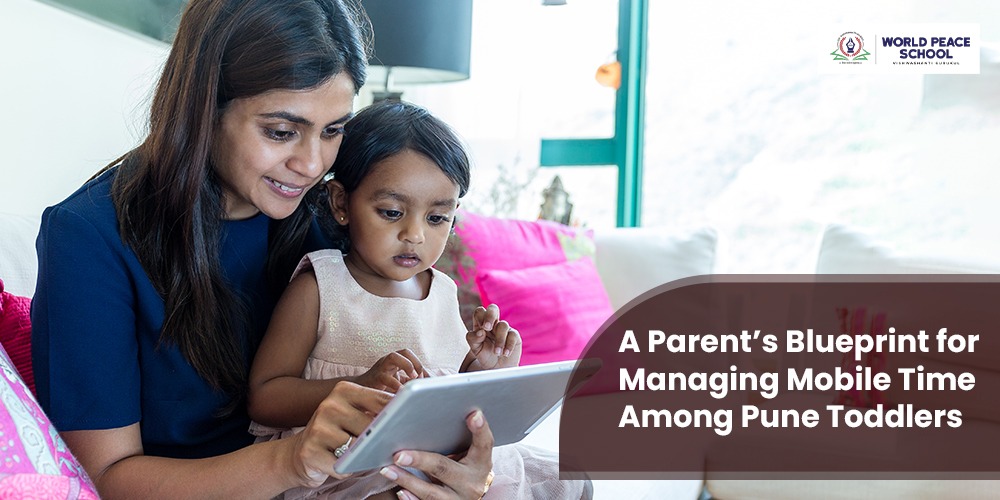
Stay involved when the screens are on. While you sit with your child, talk to them about whats on TV and ask them simple questions. Co-viewing makes watching something more interactive.
Modelling by parents is equally important. When adults purposefully restrict their phone use around children, toddlers naturally imitate this behaviour. This silent example often has a stronger influence than telling someone what to do over and over.
Screen Time vs. Quality Time: Finding Balance
Screen time isnt inherently problematic if you use it carefully. When technology replaces connection, thats when the problem starts. Quality time means being there, seeing each other in the eye, and paying attention to each other. A little bit of focused play can be better than watching someone who isnt paying attention for a long period.
Families in Pune who are in charge of how much time their toddlers spend on screens achieve balance by being mindful. Ask if the screen is helping them learn or if its taking the place of real-life interaction. This reflection helps parents adjust their routines over time rather than all at once.
Schools, including CBSE schools in Alandi, Pune, and CBSE board schools in Pune, are placing increasing emphasis on social readiness and academics. Kids who have healthy habits at home often find it simpler to move into structured learning environments.
When to Get Professional Help?
Even after careful consideration, fears dont always go away. They could need professional treatment if a toddler is really upset without a phone, doesnt want to talk to anyone, or has problems with fundamental communication.
Child psychologists, paediatricians, or early childhood teachers can detect if Small Kid Mobile Usage is affecting a childs growth. Its not a failure to ask for help; its an indication of good parenting. Early training often leads to small changes instead of lasting problems.
Conclusion
This blog is a simple and helpful approach for parents in Pune to learn about how their children use technology. Families may help Small Kid Mobile Usage go in a beneficial direction by detecting patterns, setting reasonable restrictions, and putting connection first. This not only means less time spent on screens, but it also means stronger relationships, better communication, and a firm foundation for learning and growing with confidence in the future.