A Parent’s Guide to Safeguarding Children Online in the Digital World

- Admin
- 18 August 2025
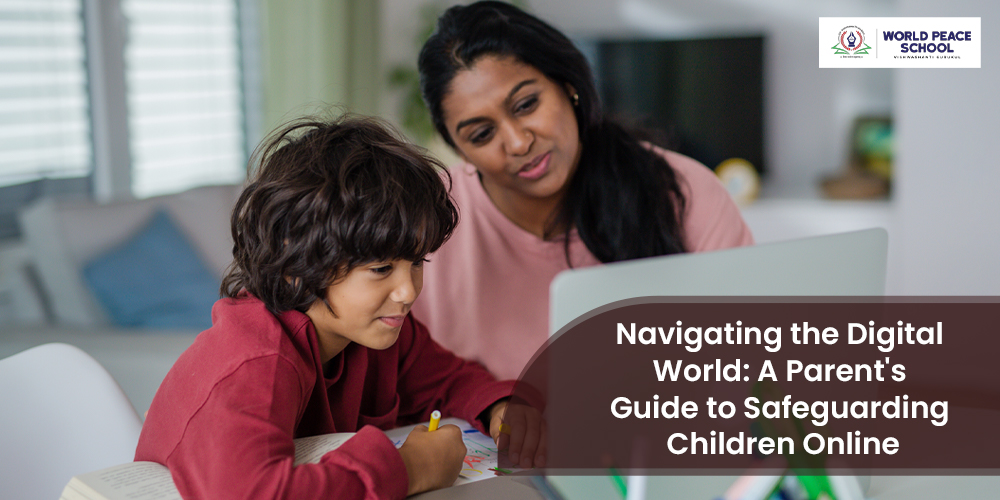
The smartphone your child has in their hand is both a great opportunity and a potential danger. World Peace School Latur is one of the best CBSE schools in Latur. We know that teaching children how to be safe online is just as important as teaching them how to be secure in real life. This complete guide will give you valuable tips on how to set limits, choose monitoring tools, encourage open communication, teach your children about online dangers, set up safe practices, and make emergency plans to ensure online safety for children.
Establishing Digital Boundaries That Work
Setting boundaries that make sense to children is the first step to digital safety for children. Saying "two hours of screen time a day" without any more information might lead to power clashes and anger. Instead, effective families set up established systems that link digital rights to showing responsibility.
Think about using graduated freedom systems in which children get more access as long as they follow family digital rules. A ten-year-old might start with instructional apps and carefully chosen information, while a fourteen-year-old who has shown good judgment over time might be able to use social media sites with specific rules.
Making "digital contracts" with your children is the best way to go about it. These agreements say what is expected: no phones or other devices while doing homework, phones should be charged outside of bedrooms at night, and parents should be able to see their childrens social media profiles. When children help make these rules, they are much more likely to follow them because they understand why they are there.
Monitoring Tools: Technology as Your Safety Partner
Todays parental control software does a lot more than just block websites. Circle Home Plus filters the network for all connected devices, and Qustodio gives parents detailed reports on their childrens online activities without being too nosy.
But openness is the key to successful monitoring. Children are more likely to follow safety rules if they know why they exist: to keep them safe from real threats like online predators, cyberbullying, and inappropriate content. Tell them that monitoring isnt about not trusting them; its about giving them the proper support while they learn how to use technology.
For children ages 5 to 10, focus on filtering content and limiting time. Pre-teens (ages 11–13) do better when their activities are watched and their privacy is slowly increased. Teenagers (ages 14 to 18) need less supervision and clear punishments for breaking safety rules. The idea is to teach people how to control themselves instead of always watching them.
Open Communication: Building Trust Through Transparency
To get children to share their online experiences, you need to develop relationships on purpose. A lot of children dont want to tell someone about anything that makes them uncomfortable because they dont want to lose their internet rights or let their parents down. Keeping lines of communication open is essential for online safety for children.
Set up regular "digital check-ins" that feel more like talking than questioning. Ask them about their favourite YouTube channels, fascinating articles theyve read, or games theyre playing with friends. Be genuinely interested in ensuring online safety for children.
When children tell you about bad things that happen to them online, such as getting weird messages, seeing improper information, or seeing cyberbullying, thank them for being honest and stay calm. Dont reprimand right away or take away their devices, because that teaches children to hide problems instead of getting help. If something online makes children uncomfortable, that discomfort is real and should be taken seriously, even if adults dont think its dangerous.
Educating About Risks: Knowledge as Protection
To maintain digital safety for children, they need to learn about real dangers that are suitable for their age without making them too scared. Use examples and comparisons that are appropriate for your childs age and stage of development. Tell younger children that "stranger danger" is just as real online as it is in real life.
Teaching people about online safety for children starts with protecting their personal information. Children need to know that seemingly harmless things like their school name, sports team, or favourite restaurant might help outsiders find them. Make guidelines for your family about what information should never be shared online, like complete names, addresses, phone numbers, school schedules, or plans for family trips.
Teach children how to spot when someone is trying to trick them. Online predators typically utilise "grooming" techniques, such as flattering children too much, asking them to keep secrets, trying to keep them away from their families, or slowly bringing up inappropriate issues. Children who know these patterns are better at spotting and reporting harmful interactions.
Talk about the psychology of being able to do things online that you wouldnt otherwise do. People typically act differently online than they do in person. They may be more aggressive, impulsive, or dishonest. Children need to know that what they do online can affect them and other people in the real world.
Safe Online Practices: Building Digital Citizenship
Protecting kids online includes adding positive content and conversations. Part of online safety for children is training them to be good digital citizens who make online communities better instead of worse.
Password security is a great place to start teaching people about protecting kids online. Show children how to make powerful, one-of-a-kind passwords by mixing letters and numbers or putting together phrases that dont have anything to do with one another.
Children need to learn how to check the reliability of sources, cross-check information, and spot fraud or false information. Look at news stories, social media posts, or ads together to practise these abilities.
Teach children to see and stay away from common online traps, like phishing emails that ask for personal information, downloads that promise free games or music but are viruses, and pop-up adverts that say their machine is sick. These situations are great for practicing how to make decisions when the risks are minimal.
Emergency Protocols: When Prevention Isnt Enough
Even if parents take precautions, children can still find themselves in real danger online. Having clear, established emergency plans ensures that children are safe online when they need to respond quickly.
Make a simple four-step plan for what to do: Stop (stop all communication right away), Dont (dont erase evidence or respond to threats), Document (take screenshots and write down facts), and Tell (tell trusted adults very away). Practise this order so that children can do it without thinking when things get tough.
Its essential to keep records of cyberbullying events. Teach them to take screenshots of threatening messages, write down the usernames and timestamps, and save any other evidence before blocking or reporting the people who sent them. This information is beneficial for school administration, platform moderators, or the police if things go wrong.
Building Lasting Digital Knowledge
Restrictions alone wont promise digital safety for children. They need continual education, open communication, and flexible plans that change as technology and your childs development do. You now have proper tools for setting clear limits, choosing the right monitoring instruments, encouraging communication based on trust, teaching about real threats, building safe habits, and dealing with emergencies. We at World Peace School Latur believe that the best way to ensure online safety for children is for parents to see it as a chance to teach them how to think critically, be good digital citizens, and trust their family, rather than just making rules and limits.