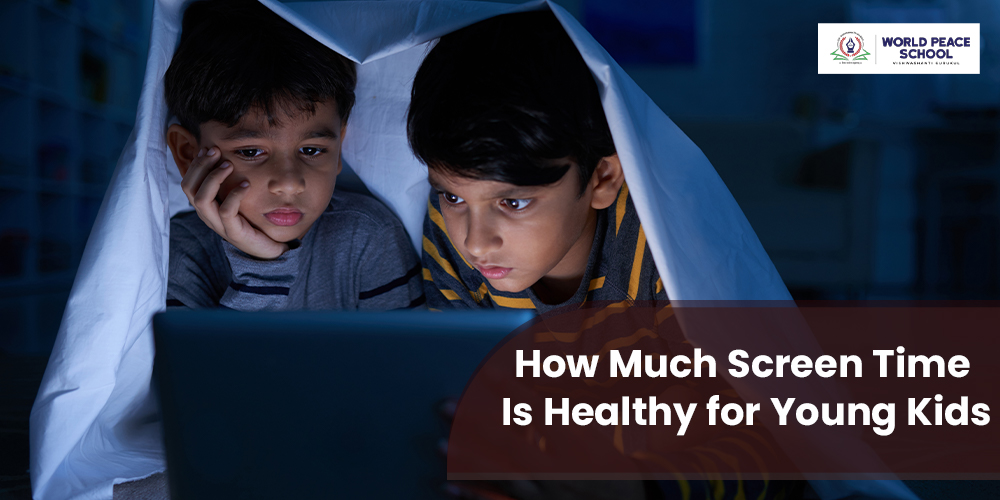
How Much Screen Time Is Healthy for Young Kids? A Guide for Parents in 2025

- Admin
- 29 December 2025
Lets be honest. Screens dont normally come into our homes with a huge statement. It starts with one cartoon to keep your toddler busy while you do something else. After that, it becomes a habit. Before you know it, your youngster is asking for a screen every time they have a few minutes to spare. You are not the only one who has heard this. Many parents still dont know what healthy screen use looks like. We think that the purpose of WPS, a top CBSE school in Alandi, is not to get rid of screens but to use them intelligently. Screens may help with learning, building confidence, and emotional growth if used properly. This article shows you what healthy screen time will look like in 2025 and how to make it work well at home.
What do professionals say? Screen Time by Age
Parents typically want specific limits, and the Screen Time Guidelines 2025 are a good place to start. Its recommended to keep kids under 18 months away from screens, except for short video conversations with grandparents or other family members. Parents should only let toddlers between 18 and 24 months use screens in a very limited way and only when they are watching along and choosing meaningful content. Many families who ask a CBSE school in Alandi for help hear the same message over and over. Toddlers need help with screen time, not freedom. One hour of high-quality educational content every day is good for kids ages two to five, especially if their parents sit with them and speak about what they see. For kids over six, the focus changes from severe limits to balance. This means that screens shouldnt take the place of sleep, outdoor play, learning, or social time.
Benefits of Healthy Screen Time in 2025
Screens can be very useful when used wisely. A brief video that teaches something can make people want to learn more. A story app can teach you new words. An interactive activity can help people be more creative. Many parents discover that their kids learn organically when they watch things together. A simple video of an animal can suddenly make you wonder about colours, forms, or how creatures move. These times together educate more than just facts. They help kids grow emotionally and make the link between parent and child stronger. Families may easily include these good things in their daily lives when they follow the Screen Time Guidelines 2025.
Risks of Too Much Screen Time
The trouble starts when screens take over. Kids who switch between apps too often may have trouble with changes. Parents might see more tantrums, less interest in toys, or trouble getting their kids to sleep at night. Too much time in front of a screen can slow down language development in toddlers. It can make it harder for older kids to focus and control their emotions. Screens are slowly taking the place of playing outside, talking to people, and doing creative things. This imbalance can affect a childs overall health, which is why its so important to be aware of it.
Signs Your Child May Be Getting Too Much Screen Time
Often, parents know something is wrong before they even look at the clock. Kids can have problems turning off their electronics, not want to play outside, or have trouble sleeping. Some people eat less at meals or keep begging for screens all day. Some people have trouble concentrating on things that dont involve a screen. These little signs are helpful. Its simpler to go back to the Screen Time Guidelines 2025 with small changes when parents see them early.
Healthy Screen Time Habits for Parents
Kids learn a lot more from what they see than from what you tell them. Kids naturally follow their parents example when they have balanced screen habits. This doesnt have to be perfect. It just needs to be consistent. Families can choose to have meals and bedrooms that dont have screens in them. Parents can pick a few shows or apps to watch or play together, which turns screen time into time spent together. Kids feel safer when they have clear routines, and they dont keep asking for more screen time.
Must Read: Pros and Cons of Mobile Phones in a Students Daily Routine
How to Create a Screen Time Schedule in 2025
A simple routine can have a significant effect. Kids can read, play, or explore outside in the mornings without screens. In the afternoons, kids can have a short, supervised screen time period followed by vigorous play. Evenings can only include a little bit of recreational screen time after homework or chores, and all devices must be turned off at least an hour before bed. This method fits well with a childs daily routine and respects the Screen Time Guidelines 2025.
Tips to Reduce Screen Dependence
It doesnt have to be hard to cut back on screens. Kids dont mind when they have exciting things to do offline. Kids love to do things like play with their senses, perform arts and crafts, read picture books, play games outside, sing, dance, and help with tiny chores around the house. Digital parenting advice often tells us that cutting back on screen time works best when it doesnt feel like a chore.
Helpful Tools for Parents in 2025
Parents can also get help from technology. There are a lot of tools available today that can help families follow the Screen Time Guidelines 2025. These tools can set daily restrictions, block harmful content, suggest approved apps, share usage reports, and plan device-free hours. If you use these tools appropriately, they can help you feel safe instead of in control. Must Read: Mental Wellness for School-Going Children: What Parents Should Know
In conclusion: Getting the Right Digital Balance
There shouldnt be stringent rules or continual worry about healthy screen time. Its all about finding the right balance. Kids learn best when they use technology and play, talk, and be creative in the real world. Screens can help kids learn rather than get in the way of learning if there are clear rules and everyone has the same experiences. At WPS, kids learn how to use technology safely while also building strong academic foundations. The goal is clear. To help kids feel good about themselves in both the real world and the internet realm.